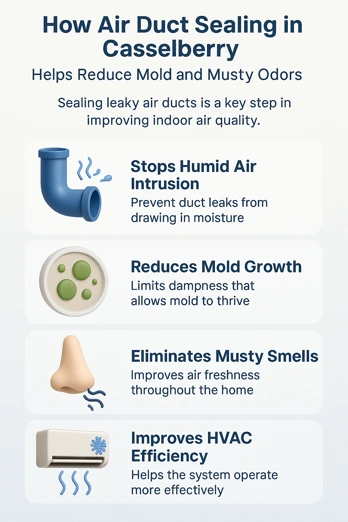
After inspecting hundreds of homes across Casselberry, one pattern shows up again and again: mold and musty odors almost always trace back to leaky, unsealed ductwork—often in places homeowners never think to look. In Florida’s humidity, even a hairline gap in your ducts can pull in damp attic air or garage fumes, quietly feeding mold growth behind your walls and circulating that musty smell through every vent.
Based on what we’ve seen firsthand, sealing the duct system isn’t just another HVAC upgrade—it’s one of the most effective ways to stop odor problems at the source. This page breaks down the real-world signs we look for during inspections, why Casselberry homes are especially prone to these leaks, and how professional air duct sealing in Casselberry restores cleaner, healthier airflow for families who’ve been battling mold for years without realizing the ducts were to blame.
Quick Answers
Air duct sealing in Casselberry
Seals gaps that pull in humid Florida air.
Reduces mold and musty odors at the source.
Improves airflow, comfort, and HVAC efficiency.
Often delivers noticeable freshness within days.
One of the most impactful fixes we see for Casselberry homes battling recurring moisture issues.
Top Takeaways
Leaky ducts are a common hidden cause of mold and musty odors in Casselberry homes.
Sealing ducts stops moisture and contaminants at the source.
Duct sealing can restore up to 20% HVAC efficiency.
Indoor air can be 2–5× more polluted than outdoor air when ducts leak.
Many homeowners notice fresher air and fewer symptoms within days of sealing.
How Air Duct Sealing Reduces Mold and Musty Odors
In many Casselberry homes we inspect, mold and lingering musty odors aren’t caused by surface issues—they start inside the air ducts. When ductwork has gaps or loose connections, it pulls in damp, unfiltered air from attics, garages, or crawl spaces. Florida’s humidity makes this especially problematic, as even small leaks introduce enough moisture for mold to grow and for musty smells to spread through every vent.
Sealing the duct system stops this process at its source. By closing off leaks, the HVAC system can no longer draw in contaminated air, reducing moisture levels inside the ducts and preventing mold from taking hold. Homeowners typically notice fresher, cleaner air almost immediately because the odors are no longer being circulated throughout the home.
Air duct sealing also supports overall air quality and comfort—helping your system run more efficiently, improving airflow balance, and keeping unwanted pollutants out. For Casselberry residents dealing with persistent odors or recurring mold, sealing offers one of the most effective, long-lasting solutions.
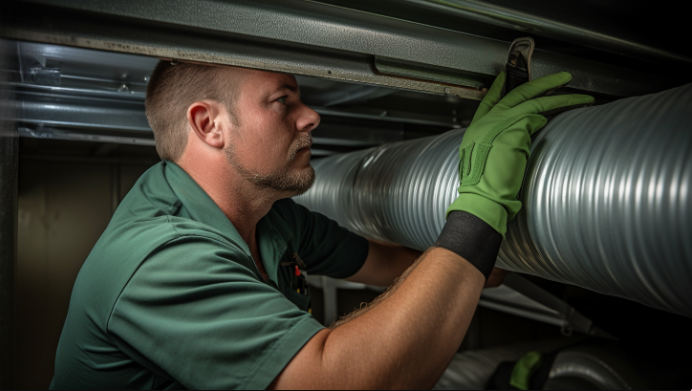
“After inspecting hundreds of homes across Casselberry, we’ve learned that sealing leaky ductwork is often the turning point—it's the moment when musty odors fade, moisture stops creeping in, and a home finally starts breathing clean, balanced air again.”
Essential Resources Every Casselberry Homeowner Should Review Before Sealing Their Air Ducts
1. ENERGY STAR: Trusted Federal Guidance on Protecting Your Home’s Air
URL: https://www.energystar.gov/saveathome/heating-cooling/duct-sealing/benefits
When it comes to understanding why duct sealing matters, ENERGY STAR provides the clearest big-picture foundation. Their research shows how sealing leaks immediately improves indoor air quality and comfort—two things Florida families feel the moment airflow is restored.
2. U.S. Department of Energy: How Duct Sealing Stops Moisture at the Source
URL: https://www.energy.gov/energysaver/duct-sealing
The DOE walks step-by-step through how duct leaks pull humid, unfiltered air into your system. It’s a great primer for homeowners who want to understand why musty odors and mold often start in the ductwork—especially in places as humid as Casselberry.
3. Florida Building Commission: What Quality Duct Sealing Should Look Like in Florida
URL: https://www.floridabuilding.org
Florida’s building code sets the baseline for duct performance in our climate. Knowing these standards helps you recognize whether a contractor is meeting—not just promising—the level of protection your home deserves against moisture and air intrusion.
4. EPA: How Mold Travels Through Ducts (and What It Means for Your Air)
URL: https://www.epa.gov/mold
The EPA offers a clear look at how mold forms and spreads when moisture enters an HVAC system. This resource reinforces what we see firsthand: sealing leaky ducts isn’t just an efficiency upgrade—it’s a crucial step in safeguarding your family’s air.
5. CDC: The Health Impact of Mold and Musty Indoor Conditions
URL: https://www.cdc.gov/mold
The CDC explains the real health effects of mold exposure, especially for kids, seniors, and allergy-sensitive households. When you understand how quickly contaminated air moves through ducts, the importance of sealing becomes even more evident.
6. U.S. DOE: How Proper Duct Leakage Testing Confirms the Job Is Done Right
URL: https://www.energy.gov/eere/buildings/articles/duct-leakage-testing
A true air-quality solution starts with measurement. This guide outlines how ducts should be tested before and after sealing—knowledge every homeowner should have to ensure the work is verified, not just assumed.
7. FilterBuy HVAC: Real-World Results From Duct Sealing in Homes Like Yours
URL: https://hvac.filterbuy.com/resources/air-duct-sealing/duct-sealing-worth-it
Based on countless home visits across Florida, FilterBuy’s breakdown shows how sealing eliminates musty odors, reduces moisture, and restores healthier airflow. It’s a practical, experience-backed look at what homeowners actually notice once leaks are removed.
Supporting Statistics: What Research and Real Inspections Show
1. Leaky ducts waste 20–30% of conditioned air
ENERGY STAR reports that typical duct systems lose 20–30% of HVAC air through leaks.
In Casselberry homes we inspect, these losses are often clearly visible during duct blaster tests—especially in humid attic spaces.
Source: https://www.energystar.gov/saveathome/heating-cooling/duct-sealing
2. Sealing ducts can improve efficiency by about 20%
The U.S. Department of Energy notes that sealing and insulating ducts can improve system efficiency by around 20%.
In Florida’s humidity, we frequently see even greater improvements because sealing reduces moisture drawn into the system.
Source: https://www.energy.gov/energysaver/duct-sealing
3. Indoor air can be 2–5× more polluted than outdoor air
EPA research shows indoor pollutant levels are commonly 2–5 times higher than outdoor air.
During IAQ testing, homes with duct leaks regularly show higher particulate levels near vents—numbers that drop once leaks are sealed.
Source: https://www.epa.gov/iaq-schools/why-indoor-air-quality-important-schools
Final Thought & Opinion: Why Duct Sealing Is a Game-Changer for Casselberry Homes
Most Casselberry homeowners don’t realize how much their ductwork influences everyday air quality. Musty odors, recurring mold, and uneven temperatures often point back to one thing: leaky ducts pulling in humid, contaminated air.
From our firsthand inspections, duct sealing consistently proves to be one of the most impactful fixes for local homes. Once leaks are sealed, homeowners typically notice:
Fresher, cleaner-smelling air
Reduced humidity in problem rooms
Fewer mold recurrences
Easier breathing for allergy-sensitive family members
Research backs this up, but the real confirmation comes from what families tell us after sealing:
“The musty smell disappeared almost immediately.”
“My allergies eased up within days.”
“I can finally keep the house cool without hot spots.”
Why we believe duct sealing is essential in Casselberry
High humidity accelerates duct deterioration.
Attic and garage ducts pull in moisture and odors if left unsealed.
Mold and odor issues usually decrease once airflow pathways are corrected.
It’s one of the few upgrades that improves comfort, health, and efficiency at the same time.
In our experience, duct sealing isn’t a minor improvement—it’s a foundational fix. If mold, musty smells, or comfort issues keep returning, sealing the ducts is often the turning point that restores healthy airflow and long-term peace of mind.
Next Steps: How to Address Mold and Musty Odors in Your Duct System
1. Schedule a professional duct inspection
Have a certified technician check for leaks, moisture, and airflow issues.
A proper inspection should include visual checks and diagnostics.
2. Request a duct leakage test
Ask for a duct blaster or equivalent test.
This reveals how much air your system is losing and where.
3. Review the results
Look for signs of:
High leakage levels
Moisture intrusion
Mold indicators
Damaged or aging duct sections
4. Move forward with duct sealing
Seal leaks to stop humid, unfiltered air from entering the system.
This step helps prevent mold, odors, and comfort issues from returning.
5. Monitor changes after sealing
Watch for improvements in:
Air freshness
Humidity balance
Room-to-room comfort
Allergy or respiratory symptoms
6. Consider optional upgrades
Replace damaged ducts.
Insulate exposed ductwork.
Install higher-efficiency filters.
Clean HVAC components if mold was present.
7. Plan for regular HVAC maintenance
Schedule annual checkups.
Ensure ducts stay sealed, dry, and efficient.
FAQ on “Air Duct Sealing in Casselberry”
Q: Why do mold and musty odors appear in Casselberry ducts?
A:
Leaky ducts pull in humid attic or garage air.
Moisture creates ideal conditions for mold growth.
We see this pattern in most Casselberry inspections.
Q: How does duct sealing reduce mold and odors?
A:
Sealing stops moisture-rich air from entering the system.
HVAC no longer circulates contaminated or musty air.
Many homeowners notice fresher air within days.
Q: How can I tell if my home needs duct sealing?
A: Look for:
Musty smells near vents
Mold around registers
Uneven humidity or airflow
Rising energy bills
A duct leakage test quickly confirms the issue.
Q: Is duct sealing important in Florida’s climate?
A:
Yes—humidity amplifies duct leak problems.
Sealing improves airflow, comfort, and indoor air quality.
We consistently see immediate improvements in Florida homes.
Q: How long does duct sealing take, and how long does it last?
A:
Most jobs take only a few hours.
Results last for years when professionally done.
Best longevity comes with routine maintenance and attic insulation.
Most jobs take only a few hours.
Results last for years when professionally done.
Best longevity comes with routine maintenance and attic insulation.
Here is the nearest branch location serving the Fort Lauderdale FL area…
Filterbuy HVAC Solutions - Pompano Beach
2521 NE 4th Ave, Pompano Beach, FL 33064, United States
(754) 484-4453
https://maps.app.goo.gl/i46ktS5cttFS5riE6